Challenge
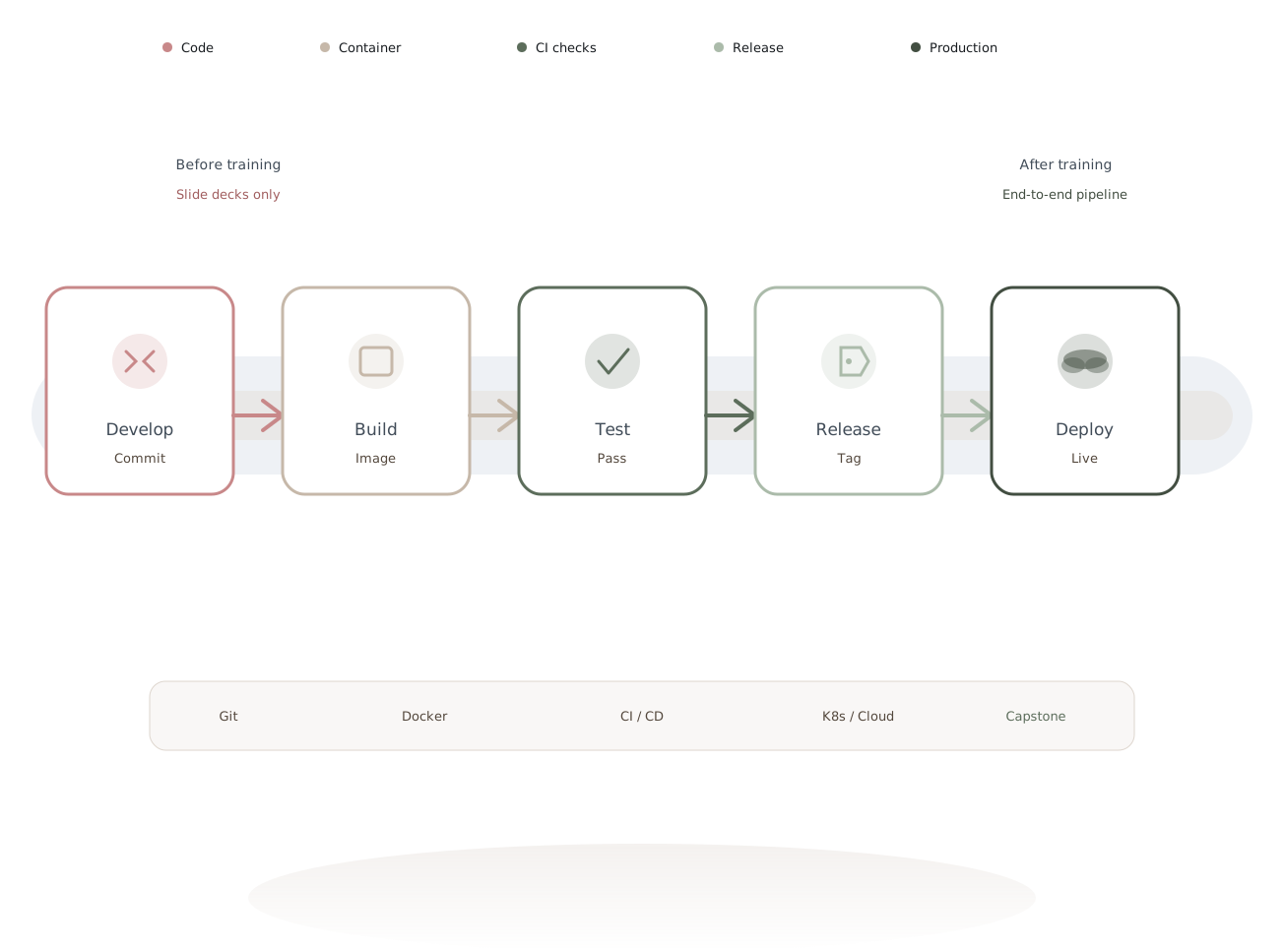
An EdTech organisation in Germany needed a pathway that could move motivated adults – many without IT backgrounds – into DevOps-capable roles. Prior curricula leaned on slides and lightly supervised exercises, so learners left without a portfolio or confidence with modern tooling. Demand for Git, containers, Kubernetes, CI/CD, and cloud automation was rising across employers the provider served. Leadership wanted a bootcamp that paced beginners carefully, kept every day Lab-heavy, and ended with a working pipeline project employers could inspect. The programme also had to accommodate mixed starting points without leaving advanced learners idle or novices behind.
Why custom
Catalogue DevOps courses assume prior Linux and cloud literacy. This cohort needed a from-zero arc spanning Git through Kubernetes, Terraform, and Ansible, with weekly content refreshes as learners progressed. We designed an eight-hour daily rhythm – four hours instructor-led, four hours Labs in small Zoom breakouts – plus mentorship checkpoints. Capstone scope and certification pathways were mapped to career outcomes the EdTech partner cared about, not a generic vendor syllabus.
What we built
| Module | Focus | Labs |
|---|
| Foundations & collaboration | Linux basics, Git workflows, and Agile delivery habits | 4 |
| Containers & orchestration | Docker images, Kubernetes workloads, and debugging | 6 |
| CI/CD & cloud automation | Pipeline design on AWS/Azure with Terraform and Ansible | 6 |
| Capstone pipeline project | End-to-end delivery showcase and peer review | 4 |
Delivery
The blended bootcamp ran about twelve weeks (~60 programme days) for ten delegates. Daily flow mixed whiteboard teaching with breakout Labs of two to three learners. Content was upgraded weekly – sometimes daily – based on progress tracking. Mentorship and peer collaboration kept beginners moving; every learner completed an individual capstone. Open-source tool installs and real-time coaching replaced passive video bingeing.
Results
- All 10 delegates completed individual DevOps capstone projects
- Programme satisfaction rated 4.8 out of 5 by delegates
- Curriculum mapped to four professional certification pathways
Plan a similar programme
Talk through your stack, cohort, and outcomes with an Uptut expert – then map a custom training roadmap for your team.
Book a free consultationClient impact
- Proved non-technical learners can reach job-ready DevOps capability with a Lab-first model
- Created a reusable European upskilling blueprint for similar EdTech cohorts
- Strengthened the provider’s credibility in career-transition tech programmes
Proof
The daily Labs and capstone made DevOps feel attainable – every learner finished with something they could show an employer.
Programme lead, EdTech provider
Trainer
Trainer details bind in Designer to the trainer reference.
Related programmes
Related courses and consulting bind in Designer to multi-reference fields.
Frequently Asked Questions
Can this programme be adapted to our stack?
Yes. Tooling tracks can emphasise AWS or Azure, swap CI systems, or deepen Kubernetes versus Terraform depending on hiring targets. For career-switcher cohorts we still keep a full foundation path, then customise Labs so graduates match the roles your partners are hiring for.
What is the minimum and maximum cohort size?
This bootcamp ran with 10 delegates. For blended DevOps career programmes we typically work with 8–16 learners so breakout Labs stay coachable. Smaller cohorts get more 1:1 mentorship; larger ones need additional facilitators.
Live online or in-person, and how do you decide?
This delivery was a blended bootcamp: live online instruction plus structured Lab blocks. Pure in-person is useful when hardware labs or facilitation quality demand it; remote blended works well when learners are distributed across Germany or Europe.
What lead time do you need from brief to delivery?
Expect roughly four to eight weeks from brief to kickoff for a multi-week bootcamp – time for discovery, Lab environment prep, and weekly syllabus design. Partner-routed cohorts with fixed start dates need earlier seat and environment confirmation.
Do you build custom Labs, or use standard ones?
Labs are custom. We do not rely on generic sandbox demos alone; installations, pipelines, and the capstone are built for the cohort’s target stack. Standard exercises are rewritten whenever tools or hiring outcomes change.
How is training effectiveness measured?
We measure Lab completion, capstone quality, and learner confidence against role profiles – not attendance. Satisfaction scores and certification pathway readiness are secondary signals we review with the EdTech partner after delivery.
.webp)
.svg)