.webp)
.svg)

Agents you can actually let act
Uptut builds AI agents that plan, call tools and complete multi-step work inside your systems, with autonomy boundaries and human checkpoints designed in rather than added after an incident. Single agents, orchestrated fleets, and the integration layer that lets them reach your data without opening a hole in your access model.
talk to experts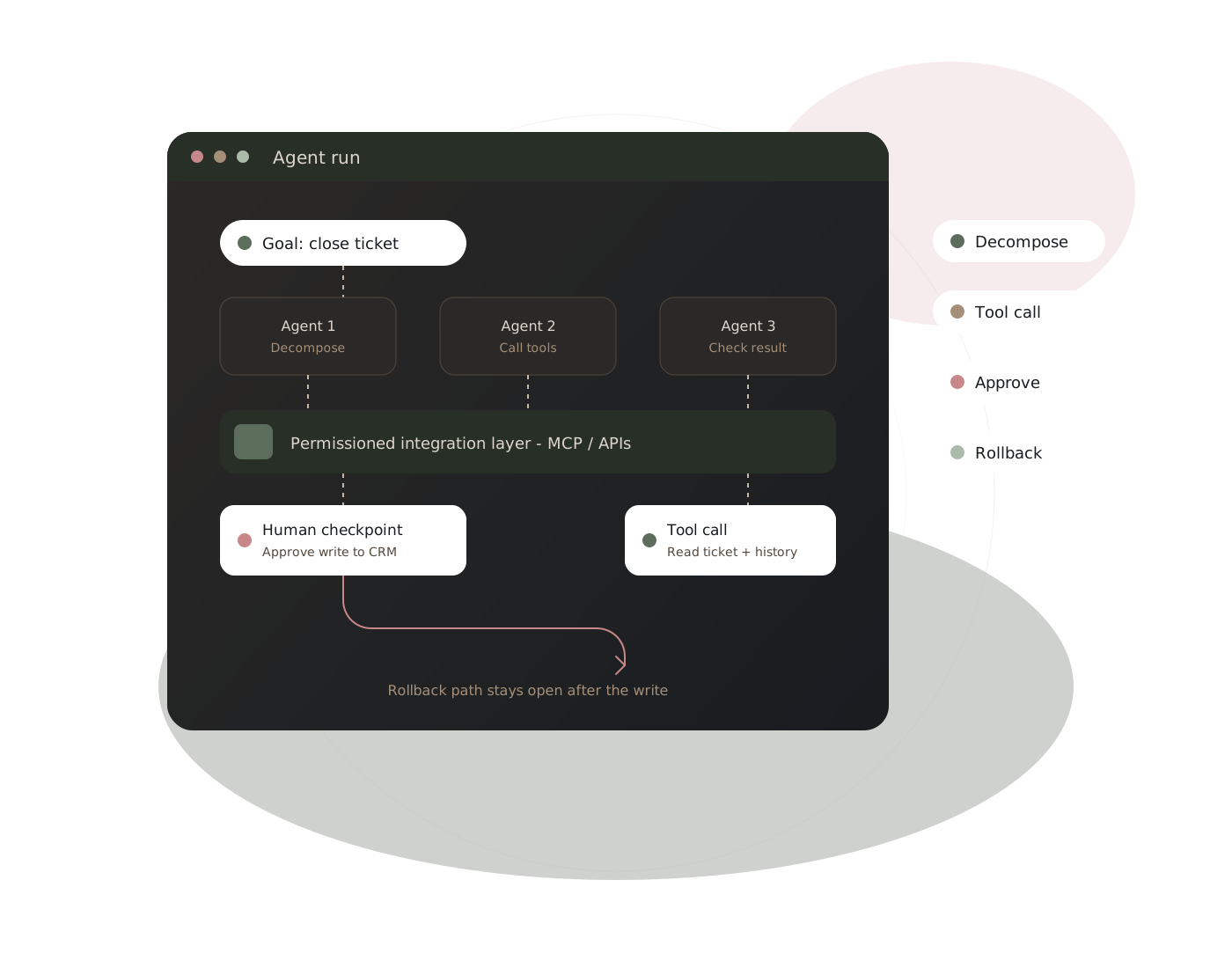
What separates a working agent from a liability

Autonomy boundaries defined per action, so an agent can read widely and write only where you allowed it.

Agents run under their own scoped identity rather than borrowing a human's credentials.

Human checkpoints placed at the decisions that carry cost or risk, not sprinkled across every step.

Every run traced end to end, with a rollback path for anything the agent changed.
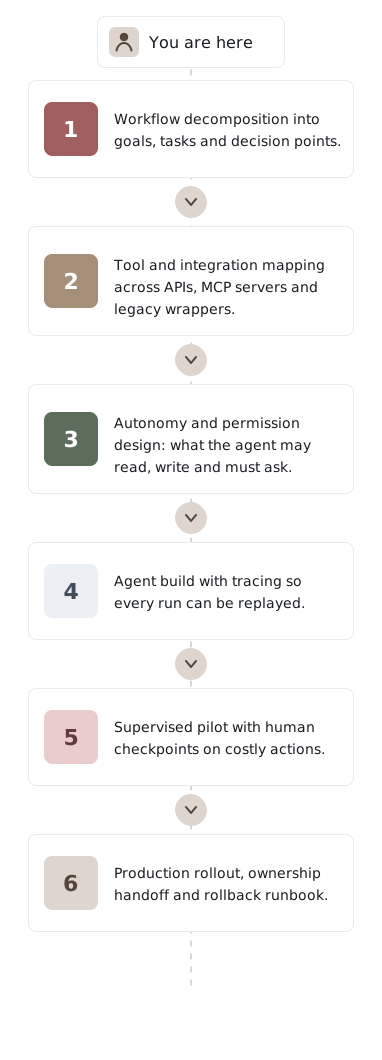
Your agent build roadmap
start now | Free Consultation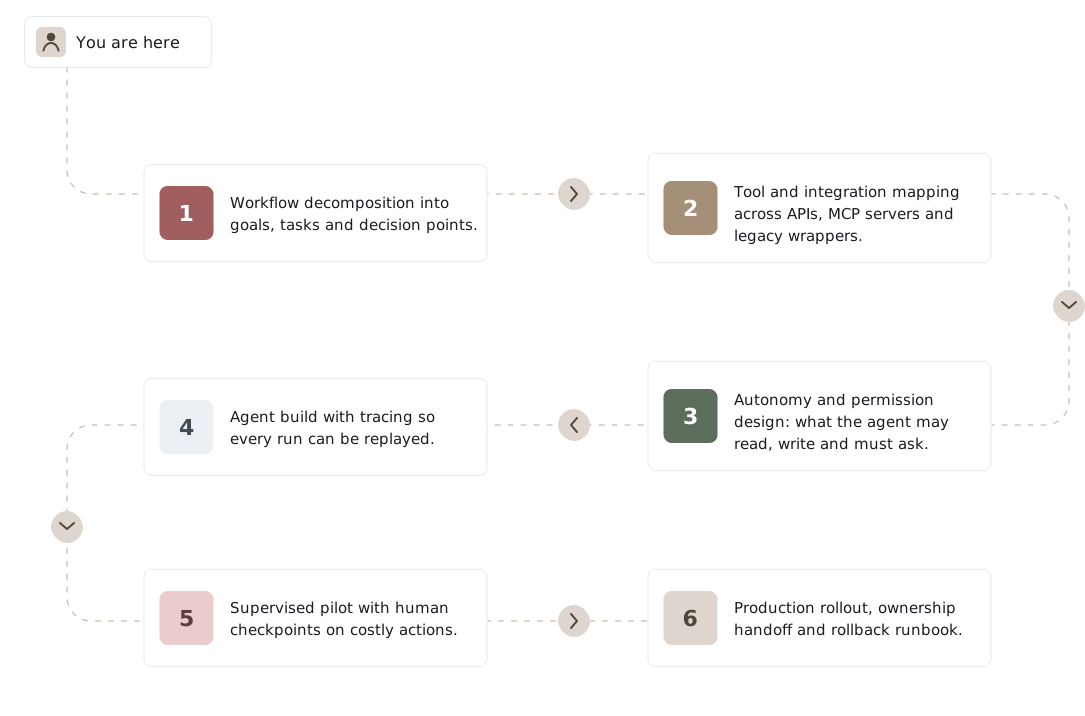
Experience the Uptut Edge
.svg)
Each project personalised for your business
 Unique processes: each service customised to serve your project
Choose one-time projects or ongoing managed consulting
- Global support: work with consultants in your timezones

Outshine competition with expertise and technology
- Expert consultants with average 10 years of experience across major industries
Best industry practices and proven frameworks for your domain
Next-gen technology including AI/ML and state-of-the-art tooling

Get more than just a generic report
Proactive discovery workshops to surface hidden risks and opportunities
Multi-domain expertise covering cloud, platforms, applications and enterprise systems
Summary reporting for key stakeholders and detailed assessments for your technical team

Frequently Asked Questions

.svg)
Building systems that decide their own next step. An agent takes a goal, breaks it into tasks, calls tools and APIs to carry them out, checks its own results and adapts when something fails. That is different from a chatbot, which answers, and from a script, which follows a fixed path. The engineering work is mostly in the boundaries: what the agent may touch, when it must stop and ask, and how you undo what it did.
RPA follows rules you wrote and breaks when the screen or the process changes. Agents handle variation, unstructured inputs and judgement calls, which is where rule-based automation has always stalled. The trade is predictability: an agent needs evaluation, tracing and permission design that RPA never required. Where a process is stable and fully specified, RPA is still the cheaper answer and we will say so.
A single agent on a contained workflow reaches supervised pilot in six to eight weeks. Production rollout with full tracing and permissions adds four to six more. Multi-agent systems spanning several business systems run four to six months, largely because of integration and access approvals rather than the agent logic. We usually start with one workflow rather than a fleet.
You own the codebase, the tool definitions, the traces and the infrastructure. Agent logic is built behind an orchestration abstraction so the framework underneath can be replaced without rewriting the workflow, and tool access is exposed through MCP servers or standard APIs that any other system can call. We document what would need retesting on a switch.
Usually yes, and the integration layer is where most of the effort goes. We map what each system already exposes, build connectors or MCP servers for what it does not, and put a permission boundary in front of everything the agent can reach. Legacy systems without APIs can often be reached through database views or a service wrapper rather than screen scraping.
It earns it. Every agent starts in a supervised pilot where a human approves each consequential action and every run is traced. We measure task success, intervention rate, cost per run and time to recover from failure against a bar agreed up front. Autonomy is widened action by action as the evidence supports it, and the rollback path stays in place either way.
Build an agent that can be trusted with real work
Book a free scoping call with Uptut experts.
sign up for a free consultation