Challenge
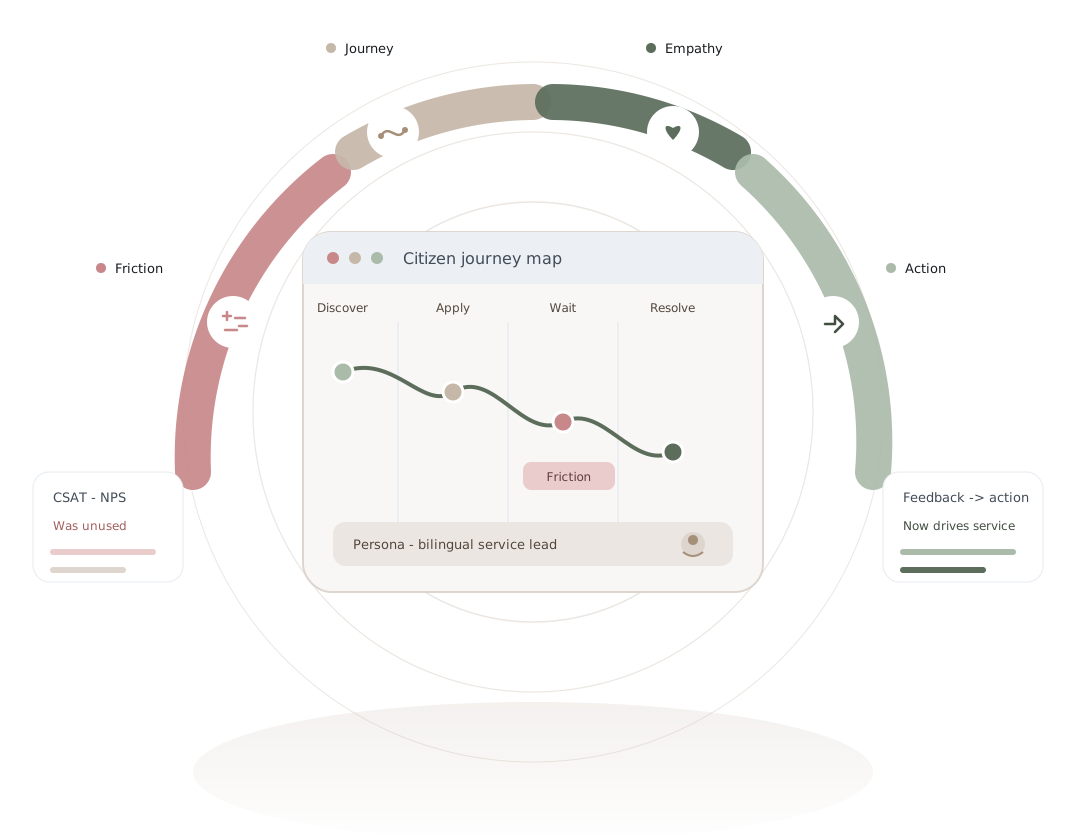
A government-sector digital transformation organisation in the GCC struggled to define Customer Experience consistently across teams. Programme managers knew CX mattered for loyalty and brand perception, yet journeys, empathy language, and feedback loops differed by group. English communication barriers made some service conversations feel disconnected. CSAT and NPS data existed but rarely drove retention actions. Leadership wanted an immersive, jargon-light intervention that created a common method for balancing digital tools with human support – not another theory seminar.
Why custom
Catalogue CX courses often assume consumer-brand retail contexts and fluent workshop English. We designed bilingual-friendly activities, government service examples, and teach-backs that forced behaviour change. Journey mapping, personas, and feedback interpretation were grounded in the organisation’s actual workflows after a discovery assessment with leadership. That localisation is what a generic CX Professional syllabus would have missed.
What we built
| Module | Focus | Labs |
|---|
| CX shared language | Definitions, moments of truth, and service principles | 1 |
| Journey & persona Labs | Mapping real citizen/customer paths and friction points | 2 |
| Empathy & communication | Clarity and empathy practice for bilingual teams | 2 |
| Feedback to action | Using CSAT/NPS signals to drive service improvements | 1 |
Delivery
Two in-person days for five programme managers. Delivery mixed storytelling, cultural connections, group reflections, and teach-backs. Trainers observed behaviour during activities and adjusted pacing for language comfort. Delegates left with templates and a knowledge kit; follow-up support covered feedback interpretation after the workshop.
Results
- Delegates left with a shared CX vocabulary and journey-mapping method
- Teams practised converting CSAT/NPS feedback into concrete service actions
- No satisfaction score or completion figure was captured for this engagement
Plan a similar programme
Talk through your stack, cohort, and outcomes with an Uptut expert – then map a custom training roadmap for your team.
Book a free consultationClient impact
- More consistent handling of service interactions across programme teams
- Greater confidence using feedback loops to improve retention and satisfaction
- Stronger empathy and clarity in customer-facing conversations
Proof
A deeply practical programme that felt relevant from the first session – the storytelling made CX methods stick.
Programme manager, government digital services
Trainer
Trainer details bind in Designer to the trainer reference.
Related programmes
Related courses and consulting bind in Designer to multi-reference fields.
Frequently Asked Questions
Can this programme be adapted to our stack?
Yes. CX Labs are rewritten around your service journeys, channels, and bilingual realities. Government or citizen-service contexts replace generic retail examples so programme managers practise on situations they recognise.
What is the minimum and maximum cohort size?
This cohort had 5 programme managers. For immersive CX workshops we recommend 4–12 delegates so teach-backs and journey Labs stay personal. Larger groups need parallel facilitators.
Live online or in-person, and how do you decide?
This engagement was in-person to support communication practice and group energy. Live online CX workshops work for distributed GCC teams when breakout tooling and bilingual facilitation are planned carefully.
What lead time do you need from brief to delivery?
A two-day custom CX workshop usually needs two to four weeks of lead time for discovery, journey sampling, and activity design. Leadership interviews before delivery improve relevance.
Do you build custom Labs, or use standard ones?
Activities are custom Labs – journey maps, persona drills, and feedback-to-action exercises built from your service context. We do not rely on generic slide decks as the learning product.
How is training effectiveness measured?
We evaluate teach-backs, behavioural observation during Labs, and whether teams apply templates to real feedback after the workshop. Optional 90-day follow-ups review applied learning rather than attendance.
.webp)
.svg)