.webp)
.svg)

Your AI is only as good as what it can find
Uptut builds the retrieval layer underneath enterprise AI: content audits, chunking and index design, ingestion pipelines and permission-aware search across the systems your knowledge actually lives in. Retrieval quality is measured against a test set built from your own queries, so you know what the assistant will get wrong before your users do.
talk to experts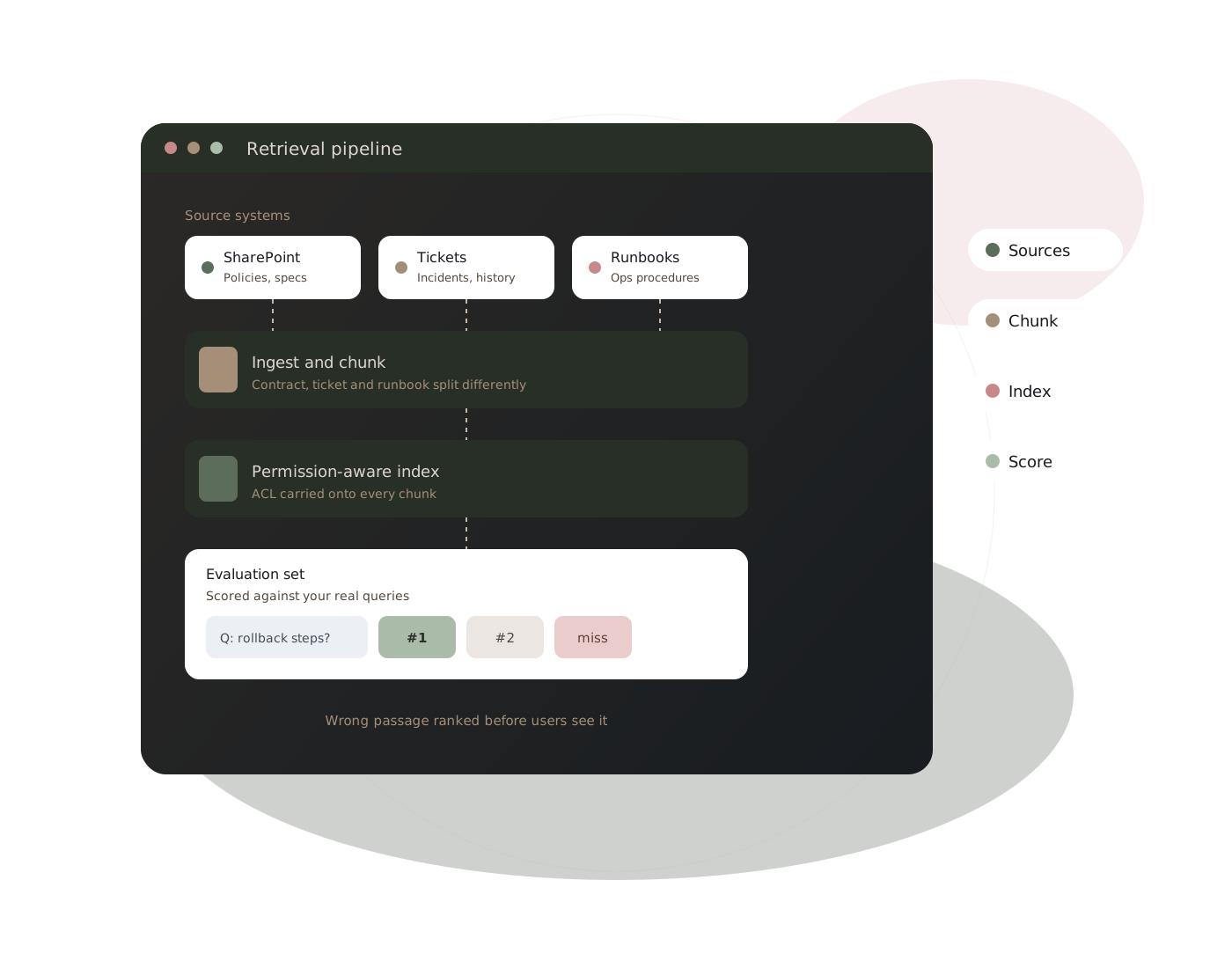
Where AI answers actually go wrong

Retrieval scored against a test set of your real queries, not assumed to work because the demo answered well.

Chunking designed per document type, because a contract, a ticket and a runbook do not split the same way.

Permissions carried through retrieval, so nobody surfaces a document they could not already open.

Pipelines that keep the index current as source systems change, instead of a one-off load that quietly ages.
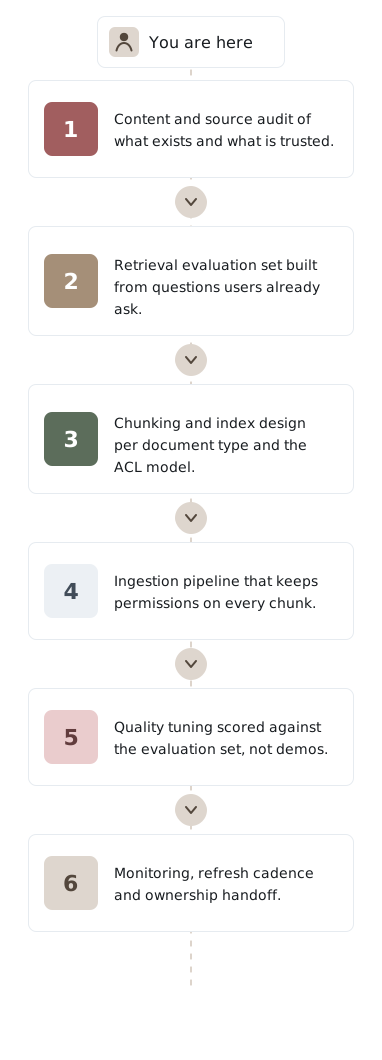
Your retrieval build roadmap
start now | Free Consultation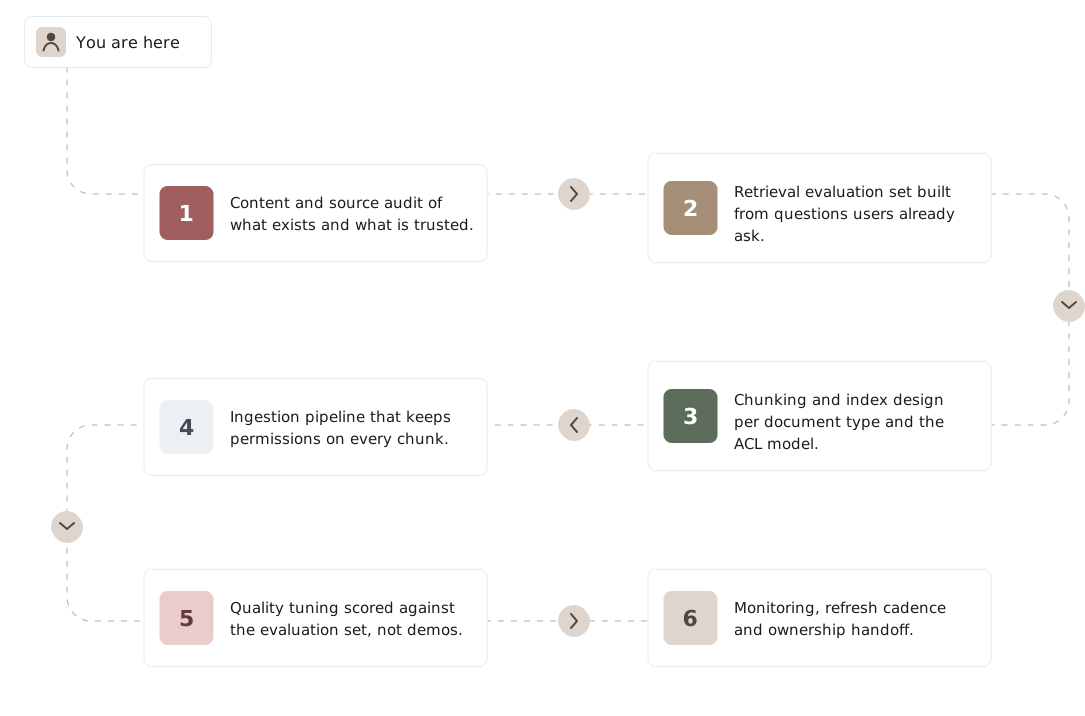
Experience the Uptut Edge
.svg)
Each project personalised for your business
 Unique processes: each service customised to serve your project
Choose one-time projects or ongoing managed consulting
- Global support: work with consultants in your timezones

Outshine competition with expertise and technology
- Expert consultants with average 10 years of experience across major industries
Best industry practices and proven frameworks for your domain
Next-gen technology including AI/ML and state-of-the-art tooling

Get more than just a generic report
Proactive discovery workshops to surface hidden risks and opportunities
Multi-domain expertise covering cloud, platforms, applications and enterprise systems
Summary reporting for key stakeholders and detailed assessments for your technical team

Frequently Asked Questions

.svg)
Everything between your source systems and the model. Auditing what content exists and whether it is trustworthy, deciding how documents are split and indexed, building the ingestion pipelines, carrying access permissions through to retrieval, and measuring whether the right passage comes back for a real question. It is the layer most AI projects skip and then blame the model for.
Different problems. Retrieval is for knowledge that changes and needs citing, which covers most enterprise use cases. Fine-tuning is for teaching a model a format, a tone or a narrow classification task, and it does not make facts current. Teams that fine-tune to fix wrong answers usually have a retrieval problem. We test that before recommending either.
A single well-structured source, such as a documentation site or a knowledge base, reaches a measured baseline in three to four weeks. Multiple systems with mixed formats and permission models run eight to twelve weeks, mostly spent on access approvals and content cleanup. A retrieval quality audit on an existing system takes two weeks.
No. Indexing runs behind an abstraction so the store can be replaced without rewriting the pipeline, and you own the ingestion code, the chunking configuration and the evaluation datasets. Re-indexing into a different store is a rerun rather than a rebuild. We document the cost and the retest scope of a switch at handoff.
It is the normal starting condition. We audit what exists, then sort it into index now, clean first, restrict and retire. Most organisations find a usable core inside a much larger pile, and indexing everything is usually worse than indexing the trustworthy subset. Duplicated and outdated documents cause more bad answers than missing ones.
With a labelled evaluation set built from questions your users actually ask, agreed before tuning starts. We track whether the correct passage is retrieved and where it ranks, how often answers are grounded in a real source, and how the system behaves when the answer does not exist. Every configuration change is scored against that set rather than judged by spot checks.
Fix the retrieval before blaming the model
Book a free scoping call with Uptut experts.
sign up for a free consultation