.webp)
.svg)

Learning experiences people finish, and then actually use
Uptut designs the experience around the content: the scenarios learners work through, the environments they practise in, and the cohort structure that keeps them showing up. Built for enterprise teams where the measure of success is behaviour on Monday, not a satisfaction score on Friday.
talk to experts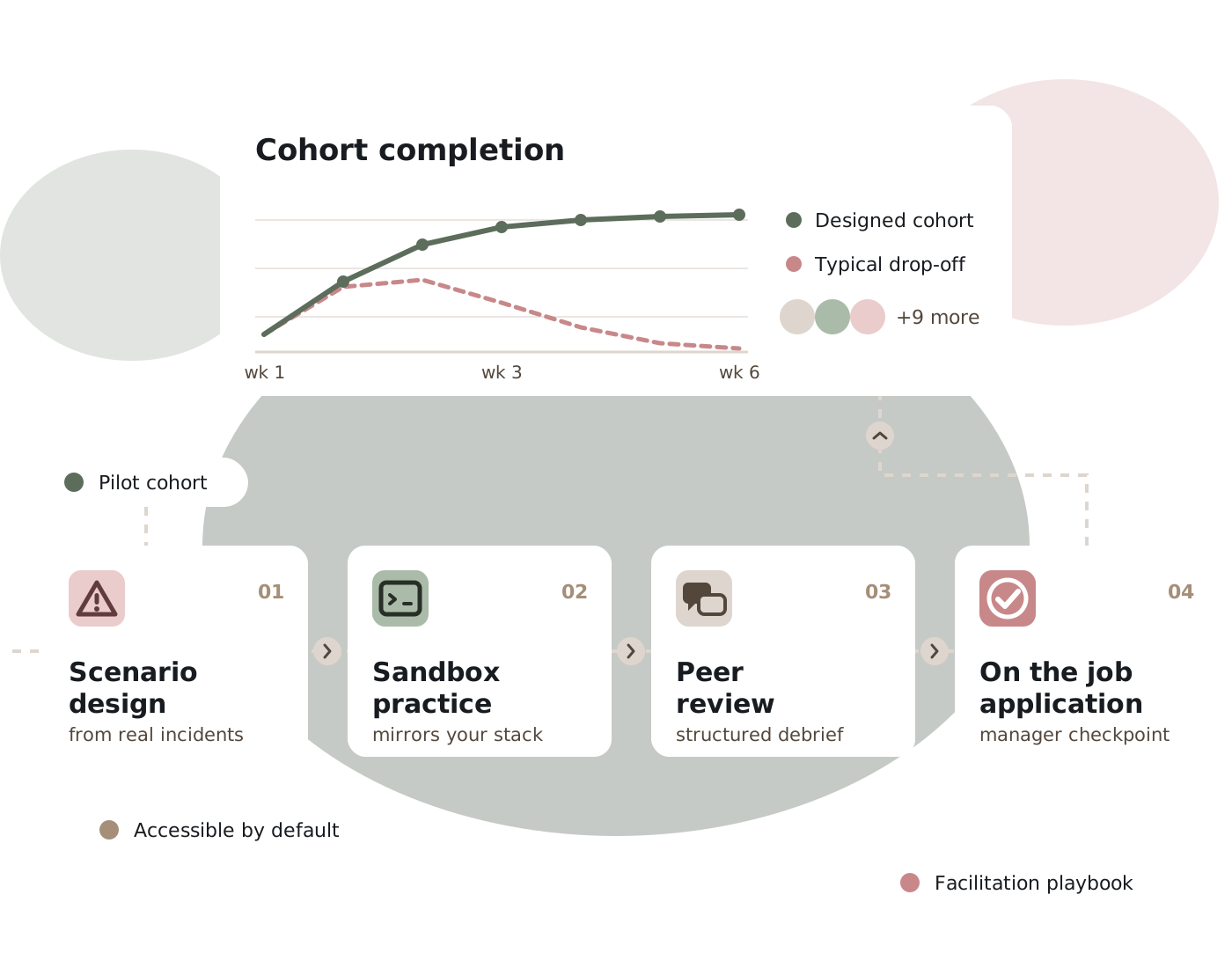
What changes when the experience is designed

Scenarios drawn from real incidents in your environment, not textbook exercises.

Sandboxes and simulations that mirror your stack, so practice transfers without translation.

Cohort structure, pacing and manager checkpoints designed to hold completion past week three.

Accessibility designed in from the first draft rather than retrofitted before launch.
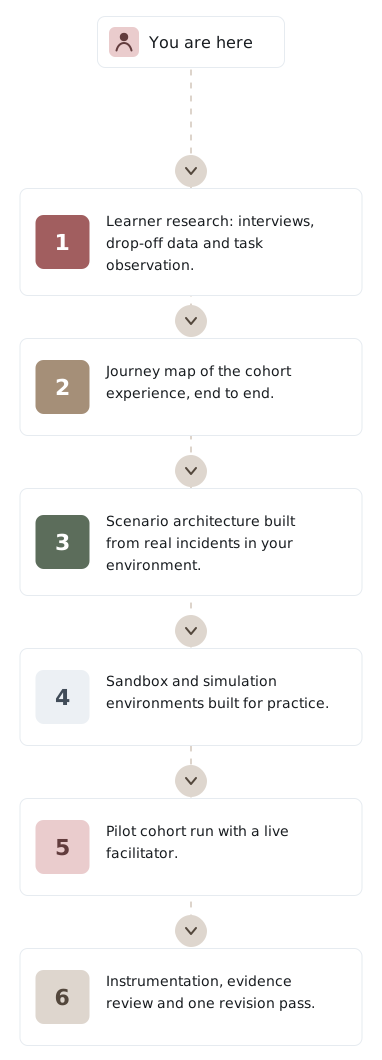
Your experience design roadmap
start now | Free Consultation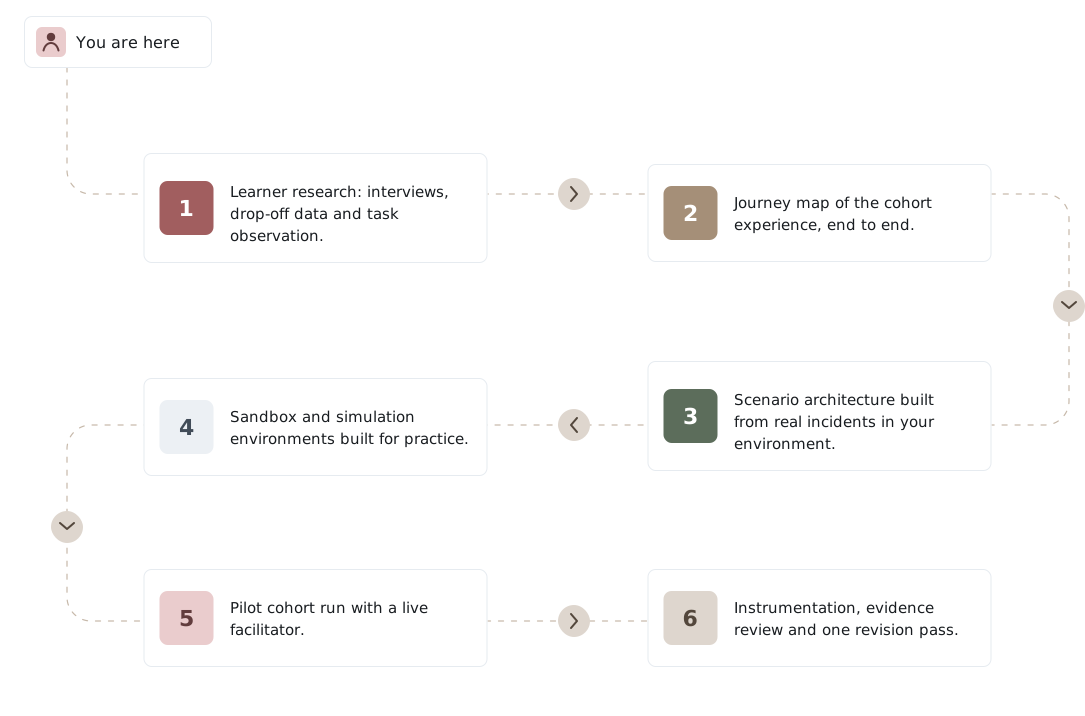
Experience the Uptut Edge
.svg)
Each project personalised for your business
 Unique processes: each service customised to serve your project
Choose one-time projects or ongoing managed consulting
- Global support: work with consultants in your timezones

Outshine competition with expertise and technology
- Expert consultants with average 10 years of experience across major industries
Best industry practices and proven frameworks for your domain
Next-gen technology including AI/ML and state-of-the-art tooling

Get more than just a generic report
Proactive discovery workshops to surface hidden risks and opportunities
Multi-domain expertise covering cloud, platforms, applications and enterprise systems
Summary reporting for key stakeholders and detailed assessments for your technical team

Frequently Asked Questions

.svg)
Learning experience design shapes everything around the content: what learners do, in what order, in what environment, and with whom. It covers scenario and simulation design, practice environments, cohort structure, pacing and reinforcement. It is not the content itself and not the visual polish. It is the design decisions that determine whether people finish a programme and apply it afterwards.
Instructional design decides what to teach and how to sequence it. Experience design decides what the learner actually does with it. The same curriculum can produce a lecture series or a scenario-driven cohort programme, and the difference in behaviour change is large. On most engagements the two run together, but you can buy experience design on its own when the curriculum is already settled.
Redesigning the experience around an existing programme usually takes four to six weeks. A new cohort programme with custom scenarios and a live sandbox runs eight to fourteen weeks, depending on how much environment build is involved. A focused scenario library for one role can be delivered in three weeks. Scope is confirmed after the first call.
No. Every engagement hands over a facilitation playbook covering the cohort rhythm, scenario briefs, debrief prompts and manager touchpoints, alongside the environment setup notes. Your own facilitators can run the programme from it, and several clients do exactly that after we run the pilot cohort with them.
Yes, and it is where this service pays back fastest. We look at where learners drop off, which sessions get poor transfer, and what practice is missing, then rebuild the experience around content you keep. Most redesigns retain the majority of the existing material and change the structure, the practice and the reinforcement around it.
We instrument the pilot cohort. That means tracking drop-off by session, scenario completion, peer and facilitator observations, and a behavioural check with managers four to six weeks after the programme ends. The baseline is captured before the pilot runs, so the second cohort is designed on evidence rather than on session feedback forms.
Design the experience, not just the content
Book a free scoping call with Uptut experts.
sign up for a free consultation