.webp)
.svg)

AI curriculum that goes past prompt basics
Uptut designs enterprise AI programmes around the roles that need them and the tools you have already licensed. Role-based pathways, hands-on work in your own environment, and governance content built in rather than bolted on. Designed with a refresh cadence, because a curriculum written this quarter will be wrong by the next.
talk to experts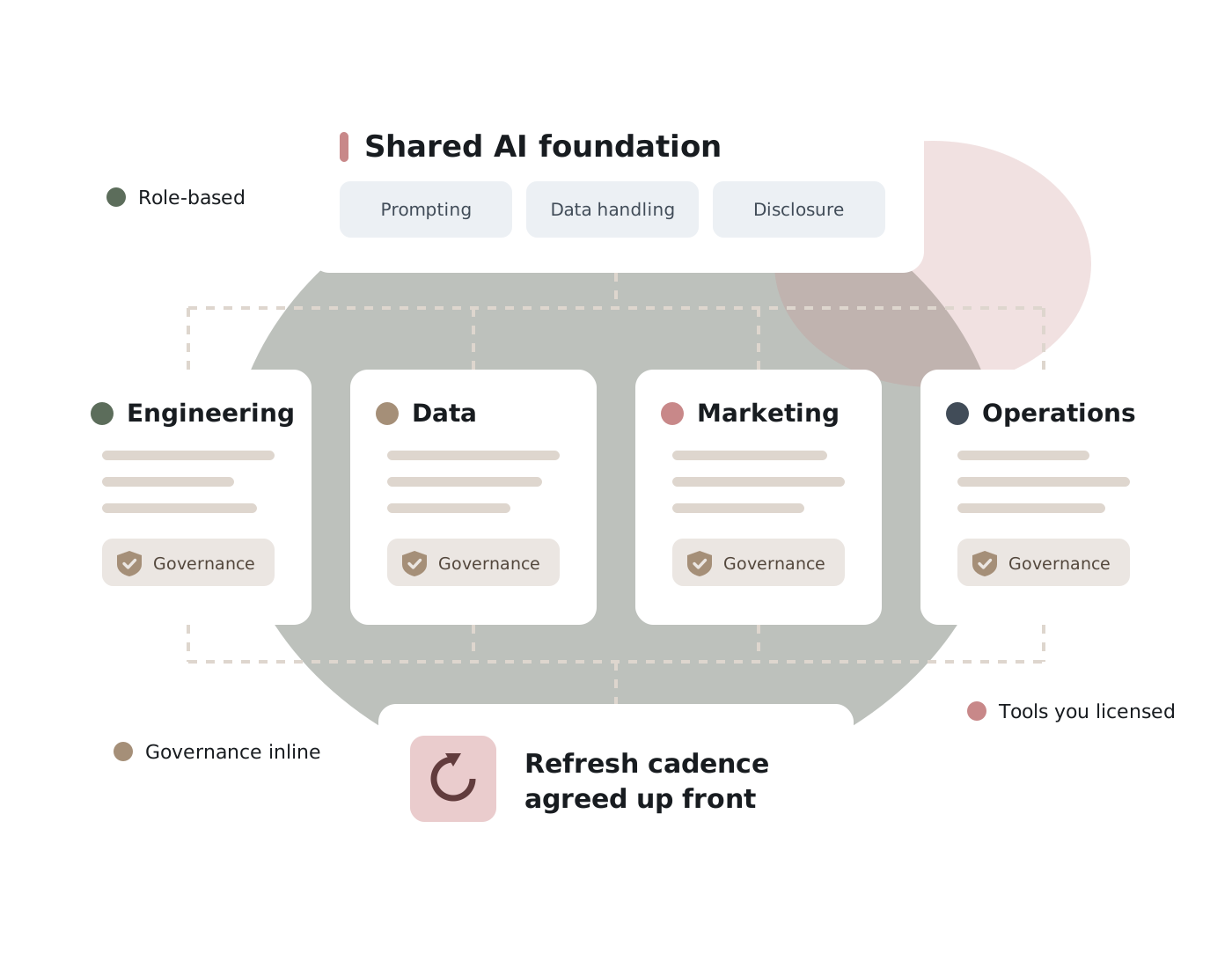
Why generic AI training stops working

Separate pathways by role, so an engineer and a marketer are never in the same generic session.

Built around the tools you have actually licensed, not a vendor-neutral overview.

Governance, data handling and disclosure rules taught inside the workflow, not as a separate compliance module.

A refresh cadence agreed up front, so the curriculum survives the next model release.
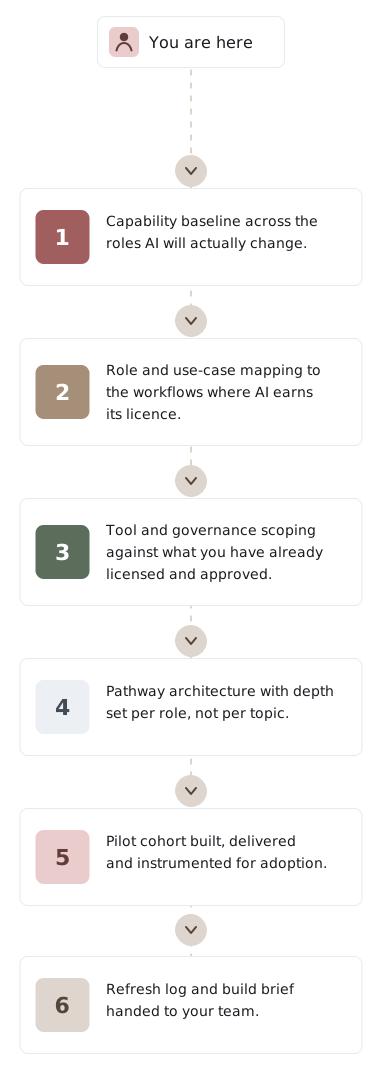
Your AI programme roadmap
start now | Free Consultation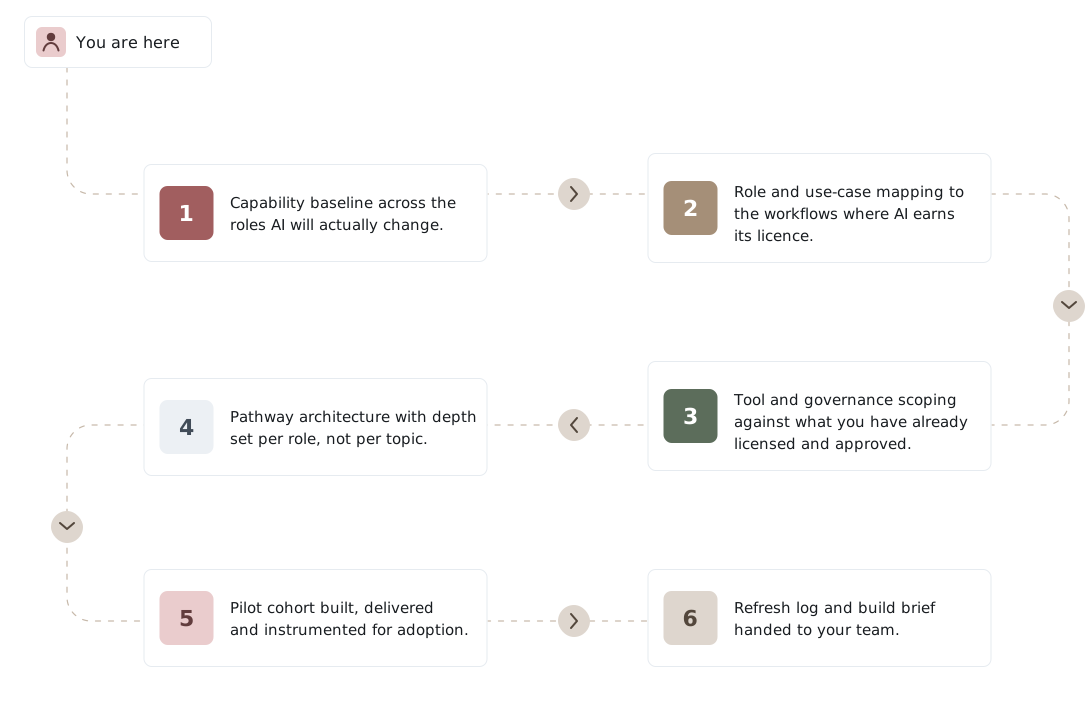
Experience the Uptut Edge
.svg)
Each project personalised for your business
 Unique processes: each service customised to serve your project
Choose one-time projects or ongoing managed consulting
- Global support: work with consultants in your timezones

Outshine competition with expertise and technology
- Expert consultants with average 10 years of experience across major industries
Best industry practices and proven frameworks for your domain
Next-gen technology including AI/ML and state-of-the-art tooling

Get more than just a generic report
Proactive discovery workshops to surface hidden risks and opportunities
Multi-domain expertise covering cloud, platforms, applications and enterprise systems
Summary reporting for key stakeholders and detailed assessments for your technical team

Frequently Asked Questions

.svg)
AI curriculum design decides what each role in your organisation needs to learn about AI, in what depth, and in what order. It covers role mapping, use-case selection, pathway architecture, governance content and the refresh plan that keeps the programme current. The output is a specification for an AI upskilling programme, not the courseware itself and not a licence to a content library.
Libraries are cheaper and work well for awareness. They fall down when people return to work, because the examples are not your workflows, the tools are not the ones you licensed, and nothing addresses your data handling rules. Most clients use both: a library for baseline fluency, and a designed programme for the roles where AI has to change how work gets done.
A single-role pathway usually takes four to six weeks from baseline to build brief. A multi-role programme covering engineering, data and business functions runs ten to fourteen weeks. If you need something in front of learners sooner, we design one pilot pathway first and architect the rest around what the pilot data shows.
No. You receive a build brief and a refresh log naming which modules date fastest and what triggers a rewrite, both written for any team to execute. Some clients have us build and deliver, some hand it to internal enablement, and some run it through an existing training vendor. The handoff is designed for all three.
Yes, and it is a common starting point. We audit what has been delivered, look at where adoption stalled, and sort the material into keep, revise, retire and build new. Most organisations that ran a broad AI fluency push in the last two years have a usable foundation and a missing middle layer for the roles that matter most.
Completion tells you nothing here, so we design against adoption. That means a pre-programme baseline on tool usage and task time, then tracking sustained usage, quality of output and the specific workflows people changed, measured six to eight weeks after delivery. Where your tooling exposes usage data, we specify how to read it before the programme starts.
Build an AI programme that sticks
Book a free scoping call with Uptut experts.
sign up for a free consultation